
Val Verde County Criminal History Checks
Begin with the question the record must answer. A pending felony belongs at the District Clerk, while a Class A or B misdemeanor belongs at the County Clerk and County Court at Law. Del Rio Municipal Court holds fine-only city cases. The Val Verde County Sheriff can confirm current county custody and holds the booking entry for people received at the jail. Texas DPS answers a different question through its public conviction and deferred-adjudication product. Comparing these sources is often more useful than treating any one result as complete.
Names alone can point to the wrong person. Collect the full legal name, spelling variants, date of birth when lawfully available, the arrest date, and a cause or booking number. Then use the narrowest official channel:
- Identify whether the event is an arrest, court case, conviction record, warrant, or custody question.
- Contact the agency or clerk that created that part of the record.
- Use a name, date, cause number, or report number to narrow the search.
- Compare preliminary charges with the later clerk disposition.
- Order a certified court copy or fingerprint review when identity and official proof matter.
Note: A public name match is a lead, not identity proof, and a booking charge may change before prosecutors file a case.
Why Val Verde Criminal Records Split
Val Verde County has no single criminal-record counter. Felony papers sit with the District Clerk at 100 E. Broadway. Class A and B misdemeanor files route through the County Clerk at 400 Pecan. The Sheriff and county jail operate at 295 FM 2523, while Del Rio Police keeps the city reports it creates at 101 Lowe Drive. Each office owns a different document. A sheriff booking record cannot certify a district judgment, and a court docket does not contain the complete police narrative.
The official Val Verde County gateway shows how departments are divided. Its captured county view also provides a useful starting point before choosing an office.

The county gateway confirms the local offices, but the requested record still has to be directed to its actual custodian.
District Clerk
100 E. Broadway, 1st Floor
Del Rio, TX
830-774-7539 criminal desk
County Clerk
400 Pecan, 1st Floor
Del Rio, TX
830-774-7564
Sheriff and Jail
295 FM 2523
Del Rio, TX 78840
830-774-7513
Del Rio Police
101 Lowe Drive
Del Rio, TX 78840
Use the city directory for the current records line.
Official Background Checks in Texas
The Texas Department of Public Safety, Crime Records Division keeps the central Computerized Criminal History repository. Its public name product discloses conviction and deferred-adjudication information that Texas law permits for public release. It does not reproduce every local incident report, booking entry, or court paper. DPS also warns that a name can produce false matches or miss the intended person.
For review of one’s own record, DPS directs the person to FAST fingerprinting through IdentoGO. Fingerprints tie the request to identity more reliably than a name. An FBI Identity History Summary is a separate federal self-review product and does not replace a Val Verde County court file. These official checks answer repository questions, while local clerks and agencies remain the sources for underlying documents.
Val Verde DPS Search Options
The public DPS portal uses an account and search credits. Searchers enter name data and may use date of birth and other details to narrow possible candidates. DPS quotes $10 for an offline name check. For fingerprint review, the agency quotes a $15 record fee plus a $10 FAST fingerprint fee. Current totals and service-code requirements should be confirmed during enrollment.
The DPS criminal-history FAQ explains the limits of name matching.
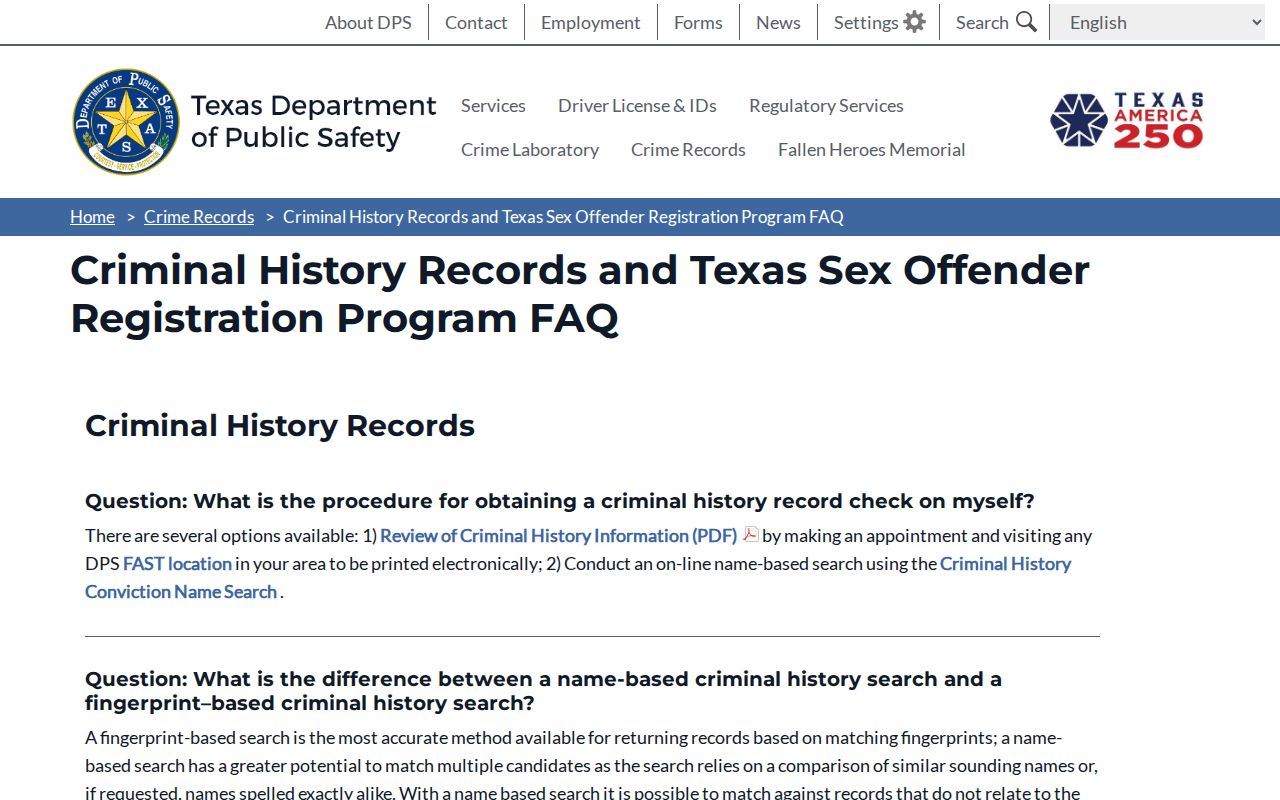
The official guidance supports a simple choice: use the name product for the narrower public result and fingerprints for personal record review.
| Official route | What it answers | Research-listed cost |
|---|---|---|
| DPS offline name check | Public conviction and deferred-adjudication information | $10 |
| DPS fingerprint review | Identity-linked personal Texas record | $15 plus $10 FAST fee |
| FAST hard cards | Two fingerprint cards | $20 |
Kinds of Criminal Records
A criminal record is not one uniform file. The arresting agency writes an incident or arrest report that records allegations and observations. Jail staff create a booking and custody entry. Prosecutors file a complaint, information, or indictment when a case moves forward. The clerk then keeps the docket, motions, settings, orders, disposition, and sentence. DPS links fingerprint-supported arrest cycles with dispositions submitted by Texas agencies.
Other products remain distinct. Courts issue warrants, CSCD keeps operational community-supervision files, TDCJ documents state imprisonment and parole status, and DPS publishes the separate sex offender registry. Juvenile, expunged, nondisclosed, victim, medical, and security-sensitive material can be restricted. The most accurate search asks for one record type at a time.
- Booking
- Jail intake that creates identity, charge, bond, property, photograph, and fingerprint records.
- Indictment
- A grand jury’s formal accusation. It is not a finding of guilt.
- Disposition
- The recorded outcome or status that resolves a filed charge.
- Deferred adjudication
- Community supervision without a present adjudication of guilt, still publicly reportable unless nondisclosed.
No Online Val Verde Jail Roster
No official public web roster or daily Val Verde County booking log was verified in the research. Commercial pages that call themselves official should not replace the county source. For present custody, call the 24-hour Sheriff’s Office at 830-774-7513. Ask for information that may lawfully be disclosed, such as booking number, current status, charge received at intake, bond or hold, and court assignment. A written request can seek an existing booking record when a phone answer is not enough.
TDCJ Online Offender Search applies after a person enters the state prison system. VINELink may provide custody notifications where participating data is available. The federal Bureau of Prisons locator covers federal sentenced custody. None of those tools is the Val Verde County jail roster, and a person held locally may be under county, state, federal, or immigration authority.
The official FAST enrollment service is pictured here because booking fingerprints and a subject-requested fingerprint check serve very different purposes.

Use the live locator with the correct Texas service code; the research did not confirm a permanent enrollment site inside Val Verde County.
Val Verde County Criminal Records: What They Contain
A DPS rap sheet generally begins with identity data, aliases, descriptors, and state or FBI identifiers. It then organizes arrest cycles, agency tracking numbers, charges, prosecutor and court tracking, dispositions, sentence, custody, and supervision. The public DPS product suppresses data that law does not authorize for general release. A court file instead emphasizes the cause number, filed count, docket activity, judgment, and financial balance.
Booking records focus on custody. The fields reflect charges as the jail received them, not necessarily the offense prosecutors later file. Read the product label before drawing a conclusion.
| Identity | Legal name, aliases, date of birth display, descriptors, and record identifiers. |
|---|---|
| Arrest cycle | Agency, date, control number, and allegations recorded at arrest. |
| Court case | Cause number, court, filed counts, hearings, motions, disposition, and judgment. |
| Booking | Book-in time, booking number, received charges, bond, hold, location, and release. |
| Sentence | Confinement, community supervision, fine, costs, or restitution when public. |
| Restrictions | Protected identifiers, juvenile data, sealed matter, and information covered by court relief. |
From Val Verde Booking to DPS
A local event can produce several records on different days. The arresting officer writes the report. Jail intake creates a separate booking entry and submits reportable fingerprints and event identifiers. A magistrate addresses probable cause and release conditions. Prosecutors then decide whether and what to file. The District Clerk or County Clerk records the filed case, and disposition information later flows to DPS.
Local report → booking → magistrate record → prosecutor filing → court disposition → DPS update
Delays or unmatched identifiers can leave a DPS cycle without the outcome that appears at the courthouse. Start any correction with one’s fingerprint-supported DPS record. Obtain a certified disposition from the clerk if the court outcome is missing, or contact the submitting arrest agency when the originating event is wrong. A clerk cannot directly rewrite the DPS repository.
The local cause number is the best bridge between stages. It lets the Val Verde County clerk locate the filed charge and signed order, while an arrest date and agency help DPS trace the related cycle. Keep copies of the fingerprint response, certified disposition, and any agency correspondence. If the public portal changes before the correction is complete, those source documents still show what was challenged and which office supplied the answer. A dismissal in the court file also needs careful treatment: it resolves the filed count, but it does not erase the earlier arrest entry without relief authorized by Texas law.
Texas Public Access Laws
The Texas Public Information Act applies to existing records held by governmental bodies, subject to confidentiality laws and exceptions. Active investigative material, juvenile data, victim details, medical information, and security-sensitive facts may be withheld or redacted. Court case records follow court and common-law access rules rather than treating every clerk request as an ordinary executive-agency public-information request.
A useful request names the event, date, location, agency, report or cause number, desired document, and delivery format. Asking an office to answer questions or create a new report is not the same as requesting an existing identifiable record.
Key Texas authorities:
Government Code Chapter 552 sets the Public Information Act framework and law-enforcement exceptions.
Government Code Chapter 411 governs criminal-history confidentiality, public conviction access, and nondisclosure.
Texas Rule of Judicial Administration 12 distinguishes judicial administrative records from filed case records.
Code of Criminal Procedure Chapter 55 controls eligibility and procedure for expunction.
Verify Val Verde Warrant Records
No official public Val Verde County warrant database was located. TCIC is for law enforcement, not a public-facing search. The fallback chain starts with the issuing court. The Sheriff can address county warrant routing, while the District or County Clerk may show a public capias event in a filed case. Del Rio Municipal Court handles city citation warrants, and the relevant justice court keeps its own fine-only and magistration records. Sealed or unexecuted warrants may not be released.
The Sheriff has warned about callers impersonating deputies and demanding payment to avoid arrest. The office says it does not demand phone payment for that purpose. Never trust a number supplied by an unsolicited caller. Find the official agency or court number independently, ask for the cause or warrant reference, and obtain written confirmation after any recall or clearance.
Fraud warning: Do not pay an unsolicited caller who claims a Val Verde County warrant will disappear after an immediate phone payment.
Restricted, Sealed & Expunged Records
Texas expunction and nondisclosure have different effects. Chapter 55 expunction can direct named agencies to return or destroy qualifying arrest records and remove index references as the law requires. Eligibility is tied to the arrest and charge history. An acquittal, pardon, certain dismissal, no-bill, or identity-theft event may qualify, but the result is not automatic merely because a case says dismissed.
Nondisclosure under Government Code Chapter 411 restricts eligible records from ordinary public release while preserving access for criminal-justice agencies and many listed governmental or licensing bodies. The correct provision depends on the disposition, waiting period, prior history, and excluded offenses. Juvenile records, protected victim or minor data, sealed warrants, medical details, biometrics, and account identifiers also have separate limits.
The Texas nondisclosure law shows why restriction is not destruction.
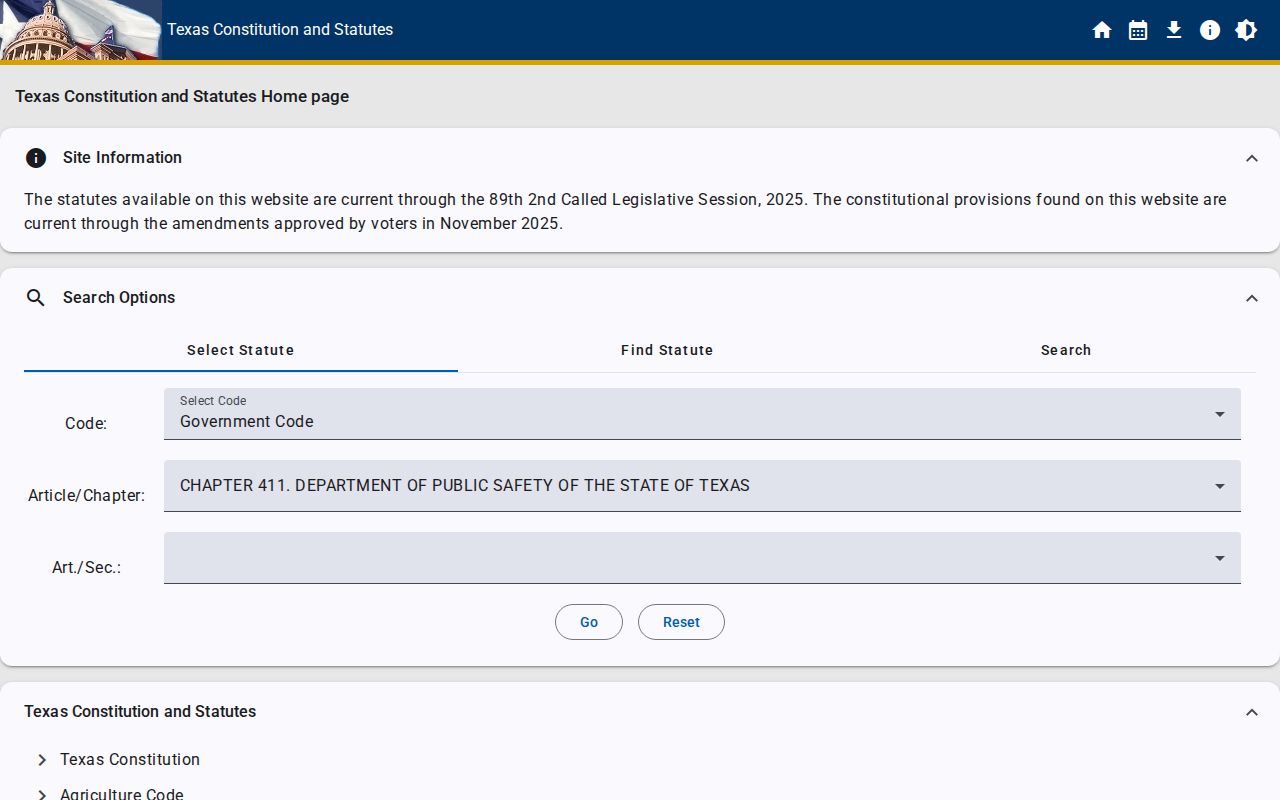
The statute preserves access for designated agencies even when an eligible record is no longer disclosed to the general public.
Val Verde Expunction Record Route
Start with a complete local record: arresting agency, arrest date, cause number, court, disposition, and every agency believed to hold a copy. Compare those facts with current Chapter 55 or the applicable nondisclosure section. Val Verde’s District Clerk lists expunctions among civil filings at 100 E. Broadway. A nondisclosure tied to a County Court at Law matter routes through that court’s clerk.
The filing must identify respondent agencies accurately. Fees and service costs were not located in current official research, so request a written estimate or use a legally sufficient inability-to-pay statement when applicable. After a signed order, allow the listed agencies time to comply. A later fingerprint review and clerk-index check can reveal whether follow-up with a respondent is needed.
| Point | Expunction | Nondisclosure |
|---|---|---|
| Effect | Return, destruction, and index removal as statute directs | Limits ordinary public release while the record remains |
| Common basis | Qualifying acquittal, pardon, dismissal, no-bill, or other listed ground | Eligible deferred adjudication or specified conviction |
| Proof | Arrest, cause, disposition, and respondent list | Judgment, discharge, waiting period, and eligibility history |
Note: Legal eligibility can turn on charges from the same arrest, so a case-specific review may be needed before filing.
Val Verde Court Records Cross Borders
Val Verde County’s border, lake, military, and federal lands make jurisdiction unusually visible. The county spans about 3,144.7 square miles in the cited Census profile. A matter can begin with Del Rio Police, the Sheriff, Texas DPS, a parks officer, military security, or a federal agency. The agency that made the arrest still owns its report, even if a person is booked locally.
Federal prosecutions in the Western District of Texas, Del Rio Division use PACER, not a county clerk search. The Bureau of Prisons locator covers federal custody, and an FBI Identity History Summary is a personal fingerprint product. The FBI electronic identity-history portal illustrates that federal self-review channel.

Federal tools supplement the local record chain; they do not supply the Sheriff’s report or a Val Verde County judgment.
City-by-City Criminal Records in Val Verde County
Del Rio is the only incorporated city identified in the county research, with 34,673 residents counted in the 2020 Census. Del Rio Police creates city incident and arrest reports, while Municipal Court handles city ordinances, traffic matters, and other fine-only jurisdiction. A city arrest can also produce a county jail booking and later a County Court at Law misdemeanor or District Court felony file.
That split makes the city route valuable: police report at Lowe Drive, custody record at FM 2523, fine-only case at Municipal Court, misdemeanor at Pecan Street, and felony at Broadway. The Texas Public Information Act source pictured below frames requests to the city or county agency that holds the existing record.
The law does not merge those offices, so a requester still needs the correct custodian.
Del Rio Record Check
34,673 residents in the 2020 Census · Police reports and Municipal Court citations begin with city channels.